English
Our Ambition
At Upperby Primary School, we believe that literacy is the foundation of all learning. We are committed to developing confident readers, skilled writers and effective communicators who are equipped to succeed both in school and beyond.
We strive to foster a lifelong love of reading through exposure to high-quality literature, rich vocabulary and meaningful literary experiences. We want every child to experience the pleasure and power of books whilst developing the knowledge, skills and confidence needed to become successful learners.
Through our carefully planned English curriculum, pupils develop strong foundational skills in speaking, listening, reading and writing. High-quality texts sit at the heart of our curriculum, inspiring children to become enthusiastic readers and thoughtful writers.
Curriculum Design
Our English curriculum is carefully designed to ensure that knowledge and skills build progressively from Nursery to Year 6.
In Nursery, children begin their literacy journey through Rhyme Town, where they develop listening skills, vocabulary, rhyme and phonological awareness through songs, stories and talk-rich experiences.
As children move into Reception and Key Stage 1, they are taught through Read Write Inc. (RWI), a systematic synthetic phonics programme which teaches pupils to read with accuracy, fluency and understanding. Through daily phonics lessons and carefully matched reading books, children develop secure decoding skills and confidence as early readers.
Once pupils have secured the foundations of reading, they continue to develop fluency, vocabulary and comprehension through Ready Steady Read Together, our guided reading curriculum. Through high-quality fiction, non-fiction and poetry, pupils engage with increasingly challenging texts and develop a deeper understanding of language and literature.
Building upon these reading experiences, we have recently introduced Ready Steady Write. This carefully sequenced writing curriculum enables pupils to study high-quality texts as readers before applying their understanding of vocabulary, grammar and authorial techniques within their own writing.
Together, these approaches provide a coherent literacy journey that develops confident readers, successful writers and effective communicators.
Early Reading
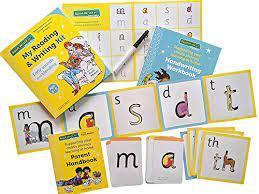
At Upperby Primary School, we recognise that becoming a successful reader is one of the most important milestones in a child's education.
We use Read Write Inc. (RWI) to teach phonics and early reading. Through daily, systematic phonics teaching, children learn to decode words accurately and develop the fluency needed to become confident readers. Reading books are closely matched to pupils' phonics knowledge, ensuring that every child experiences success and develops confidence in their reading.
Strong foundations in phonics enable children to access the wider reading curriculum and prepare them for the transition to Ready Steady Read Together, where the focus broadens to include comprehension, vocabulary development and reading for pleasure.
Guided Reading
.png?format=2500w)
Reading is at the heart of our curriculum and underpins success across all areas of learning.
Through carefully planned guided reading sessions, pupils develop:
- Fluency and accuracy
- Vocabulary knowledge
- Comprehension skills
- Inference and deduction
- Critical thinking
- Confidence and enjoyment in reading
Children in Years 2 - 6 engage with a diverse range of fiction, non-fiction and poetry that broadens their understanding of the world whilst developing their appreciation of literature.
Discussion plays a vital role within reading lessons, enabling pupils to explore, question and explain their thinking. Through rich conversations around texts, children develop both their understanding and their ability to articulate ideas clearly and confidently.
Our aim is to ensure that all pupils become fluent readers who read widely, think deeply and develop a genuine love of reading.
Writing
To further strengthen our English curriculum, we have recently introduced Ready Steady Write, a research-informed writing programme that places high-quality literature at the centre of learning.
This addition complements our established Ready Steady Read Together reading curriculum by creating clear links between what pupils read and how they write. By studying carefully selected texts as readers, children learn how authors craft language, structure ideas and engage their audience before applying these techniques within their own writing.
Ready Steady Write provides a carefully sequenced progression of knowledge and skills, enabling pupils to build confidence and expertise as writers as they move through school. Through the programme, children are taught to:
- Write for a range of audiences and purposes.
- Develop ambitious vocabulary.
- Apply grammar and punctuation accurately.
- Structure writing effectively.
- Edit and improve their work.
- Write independently and confidently.
The introduction of Ready Steady Write reflects our commitment to continually developing and enhancing our curriculum so that all pupils experience high-quality, inspiring English teaching. By placing excellent children's literature at the heart of writing lessons, the programme helps pupils develop both the technical skills and creativity needed to become successful writers.
Speaking and Listening
Spoken language forms the foundation of successful literacy development.
Opportunities for discussion, oral rehearsal, storytelling, questioning and collaborative learning are embedded throughout our English curriculum. These experiences support pupils in developing vocabulary, organising their thinking and expressing ideas with clarity and confidence.
We encourage children to become effective communicators who can listen attentively, respond thoughtfully and participate positively in a range of contexts.
Inclusion
We maintain ambitious expectations for all pupils and believe that every child has the right to experience success in English.
Lessons are carefully adapted to meet the needs of individual learners whilst ensuring that all pupils access a rich and challenging curriculum. Appropriate scaffolds, targeted support and opportunities for challenge enable all children to engage with high-quality texts and achieve their full potential.
Through inclusive teaching practices, we ensure that every learner develops confidence, resilience and a sense of achievement.
Assessment
Assessment is an integral part of teaching and learning.
Teachers use ongoing formative assessment through discussion, observation, questioning, reading conferences and written outcomes to identify strengths and next steps in learning. This allows misconceptions to be addressed promptly and ensures that learning is secure before new concepts are introduced.
Regular assessment informs planning and enables teachers to provide appropriate support and challenge, helping all pupils make strong progress throughout their learning journey.
We Aim for All Pupils to Become...
Fluent Readers
Who read accurately, confidently and with understanding. They develop strong comprehension skills, a rich vocabulary and a genuine enjoyment of reading for both pleasure and purpose.
Confident Writers
Who can write effectively for a range of audiences and purposes, selecting appropriate vocabulary, grammar and structure to communicate their ideas successfully.
Effective Communicators
Who can articulate their thoughts, justify their ideas and engage in meaningful discussion with confidence and respect.
Independent Learners
Who can apply their literacy skills across the curriculum, think critically and approach new learning with confidence and resilience.
Lifelong Readers and Learners
Who appreciate the value of books, language and literature, and leave our school with the knowledge, skills and enthusiasm needed for the next stage of their education and beyond.
Supporting Your Child at Home
Reading with your child at home is one of the most important things you can do to support their learning. We strongly encourage you to read to your child and with your child every day, helping to develop their vocabulary, comprehension and love of books.
Supporting Your Child with Phonics
From EYFS, children bring home a reading book that matches the phonics level they are working on in school. We ask that you read this book three times with your child before it is returned to school and changed. Re-reading familiar texts helps children build fluency, confidence and accuracy.
Children can also access the same phonics book they are reading in school through their Oxford Owl login. This provides an additional opportunity to practise at home and supports their progress in class.
If you would like to purchase a reading support pack to use at home, please contact the school office for more information.
Supporting Your Child as a Fluent Reader
Once your child is reading fluently and moves onto Accelerated Reader, we expect them to read at home at least five times each week. These reading sessions do not need to be long; short, regular periods of reading are often the most effective.
Regular reading helps children to:
- Develop reading fluency and stamina
- Improve their vocabulary and comprehension skills
- Build confidence as independent readers
- Develop a lifelong love of reading
After finishing a book, children are encouraged to complete their Accelerated Reader quiz in school to check their understanding and monitor their progress.
Reading Together
Even when children become confident readers, it is important to continue reading with them and discussing what they have read. Asking questions about characters, events and favourite parts of a story helps deepen their understanding and encourages a positive attitude towards reading.